01
Coaxial point source
Four low-frequency drivers vent around a central horn. One acoustic origin instead of two; the image holds as you move.
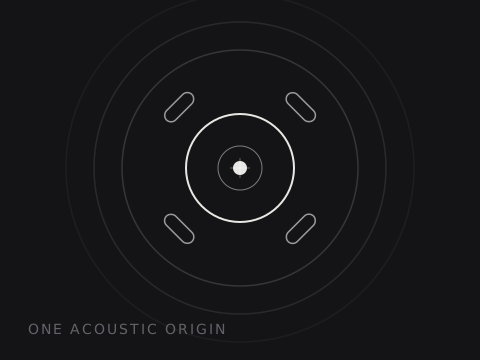
Square Two is a coaxial point source. Four 5-inch woofers vent through bandpass chambers in the face of a central horn, so a 320 mm enclosure radiates as a single source rather than a box with drivers in it.
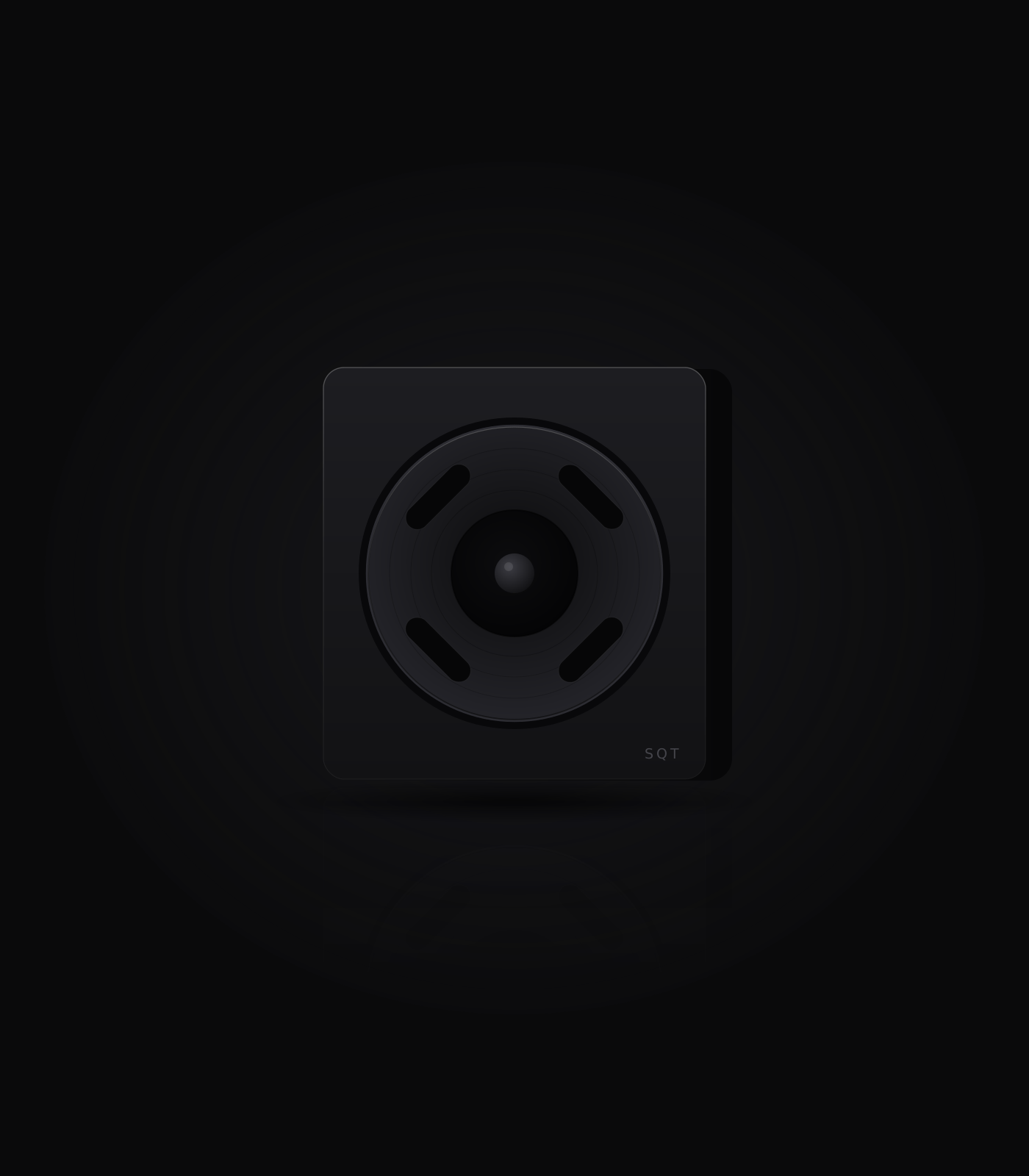
Compact powered two-way. Coaxial horn, four 5″ woofers, 1 kHz phase-linear crossover. 320 mm enclosure, bass-reflex, convertible to sealed. Hypex Ncore amplification. Optional SQB bass system extends it to three-way, down to 16 Hz.
SQUARE TWO →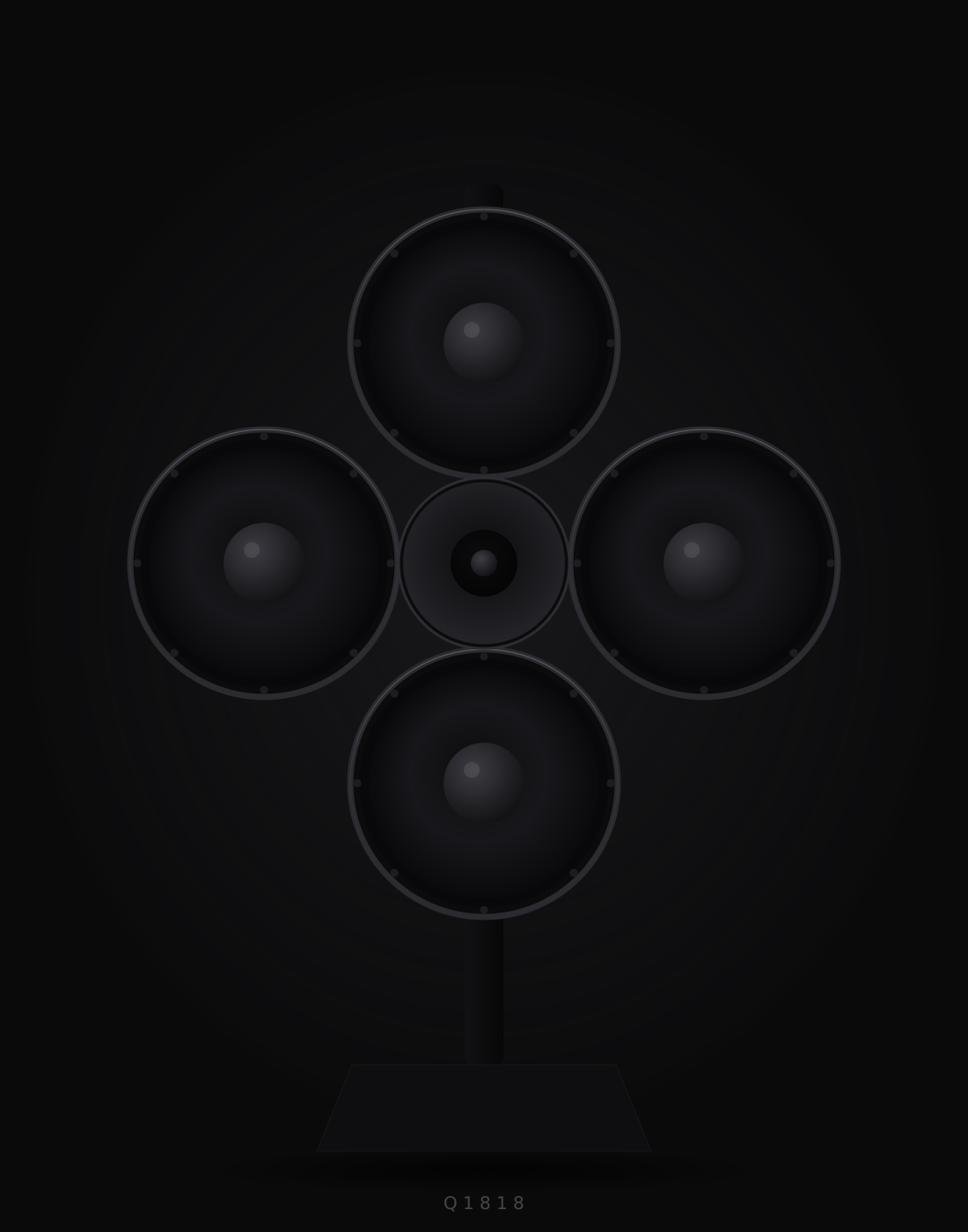
Impulse-corrected open-baffle reference system. Four 18-inch drivers and a compression driver in a baffleless coaxial array, with additional 18-inch subs. Approximately 10 kW of passively cooled Class D. Figure-of-eight radiation. Tuned in-room, per control room.
Q1818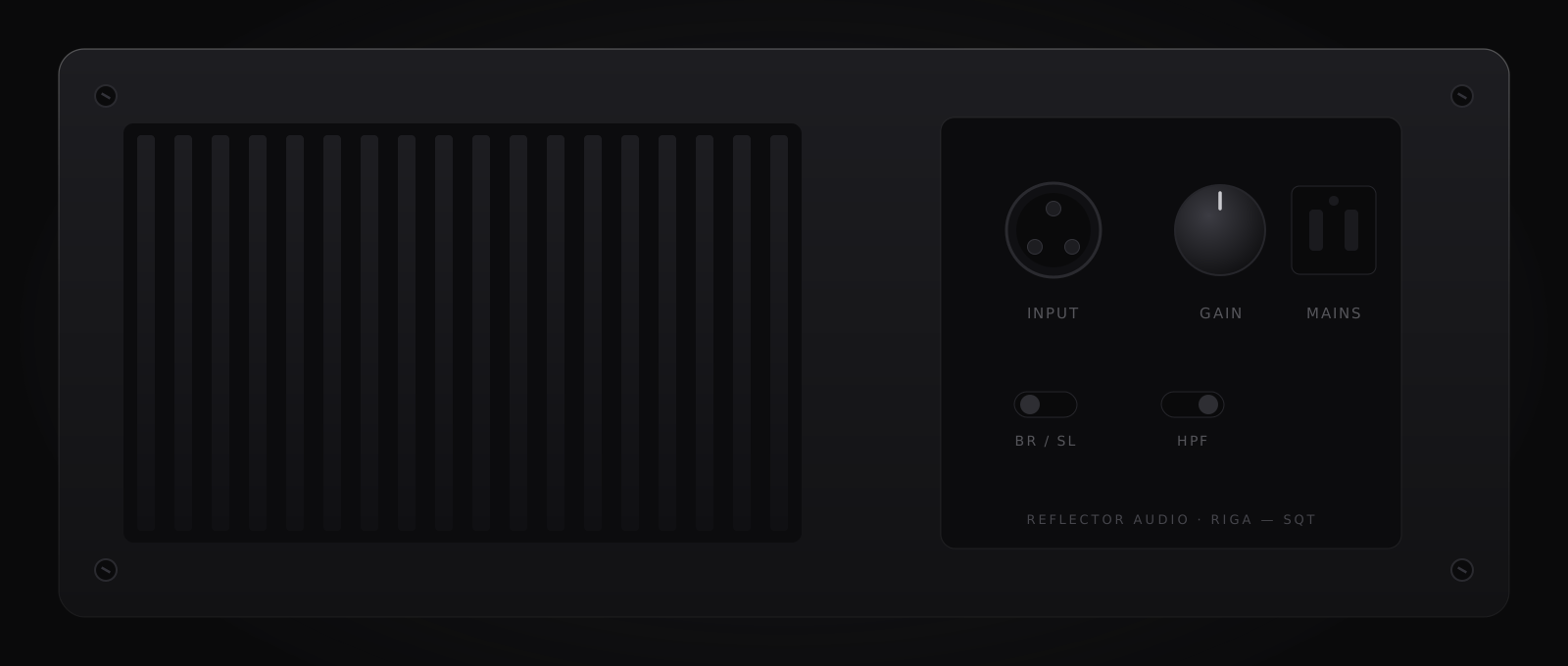
A coaxial point source in a 320 mm enclosure.
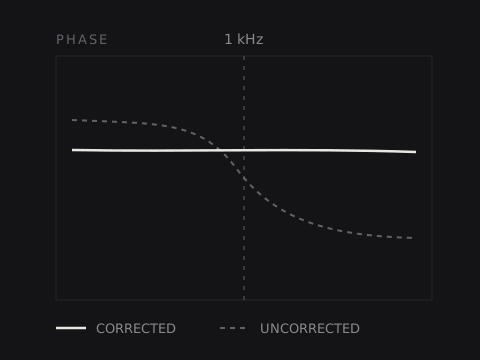
A central 1.4-inch compression driver sits on the horn; four 5-inch woofers vent through bandpass chambers in the horn face around it. Their acoustic centres align, so the monitor behaves as one source through the 1 kHz crossover instead of two sources arguing about where the image sits. The crossover is phase-linear from about 200 Hz, corrected with IIR filters rather than FIR.
| Configuration | Powered two-way, coaxial horn — bass-reflex, convertible to sealed |
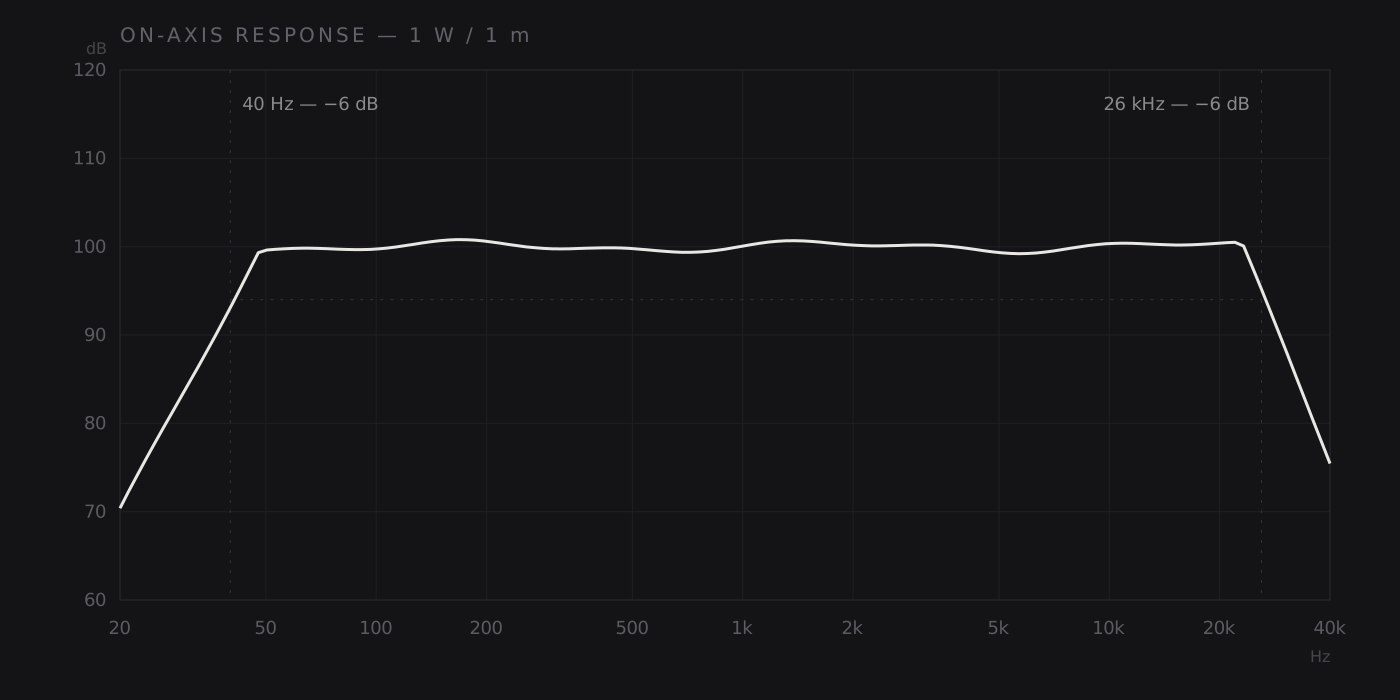
| Frequency range | 40 Hz – 26 kHz (−6 dB) |
| Crossover | 1 kHz, phase-linear from ~200 Hz (IIR, no FIR) |
| Drivers | 4 × 5″ Eighteen Sound woofers · 1.4″ FaitalPRO compression driver |
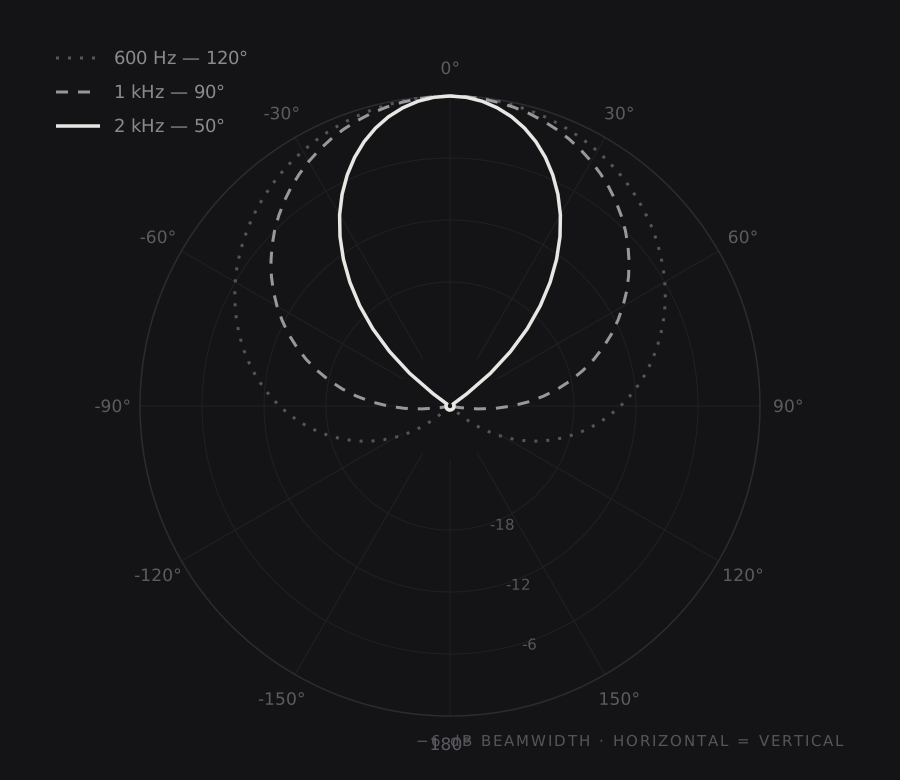
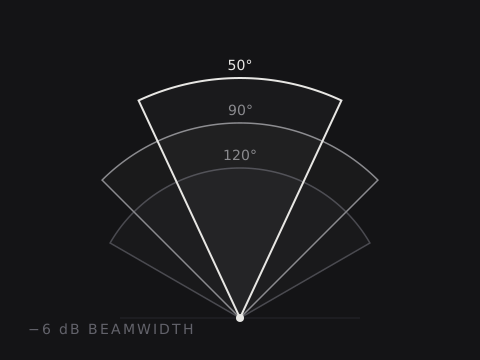
| Directivity | 120° > 600 Hz · 90° > 1 kHz · 50° > 2 kHz — horizontal = vertical |
| Max SPL | 112 dB (3% THD) · 118 dB peak |
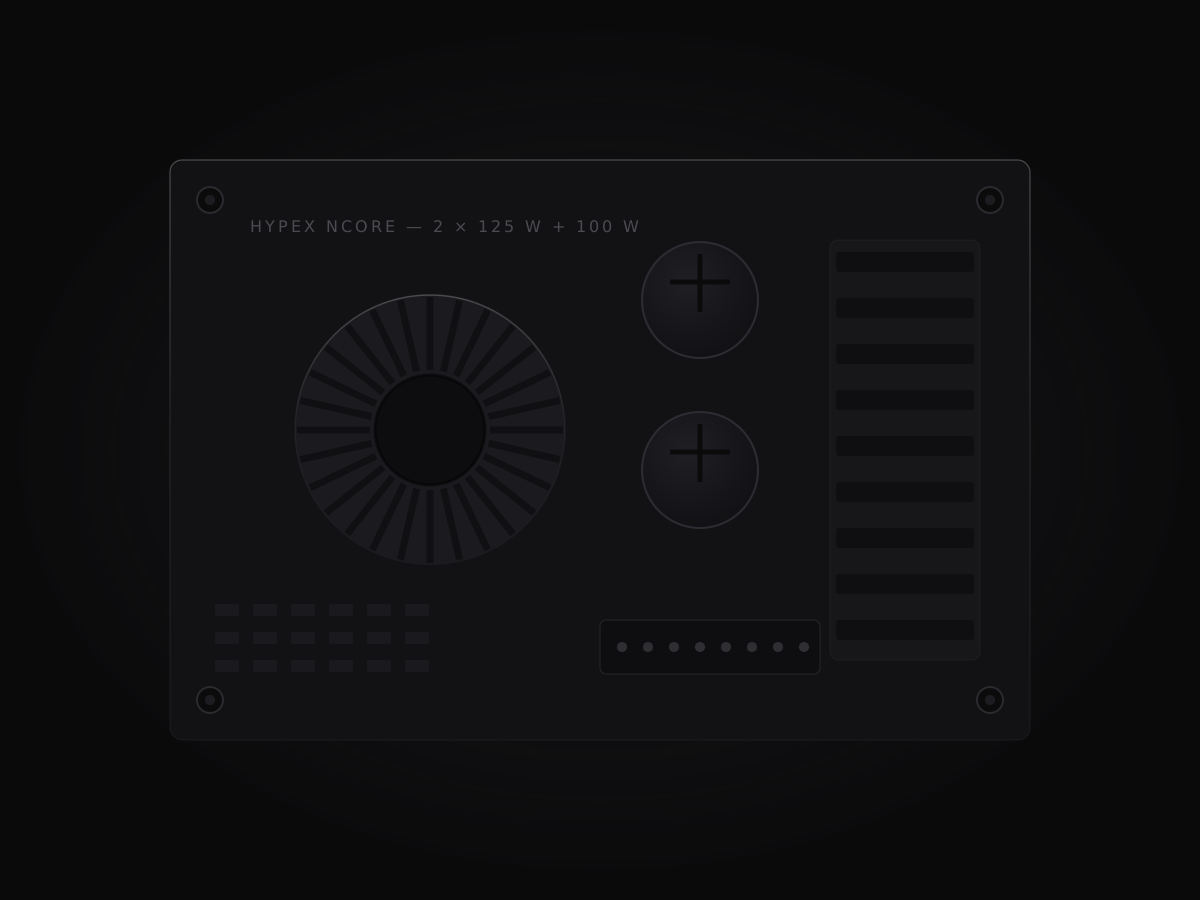
| Amplification | Hypex Ncore 2 × 125 W + 100 W · Sigma DSP |
| Pair matching | 0.35 dB |
| Enclosure | 320 × 345 × 325 mm · 19.4 kg |
| Bass extension | SQB system, optional — three-way, to 16 Hz · latency < 5 ms |

Four low-frequency drivers vent around a central horn. One acoustic origin instead of two; the image holds as you move.
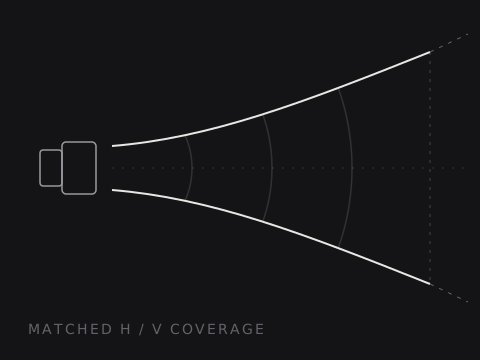
Controlled directivity and high sensitivity, so the compression driver works in a smaller, more linear part of its excursion. Horizontal and vertical dispersion are matched.
The 1 kHz crossover is corrected in the digital domain from ~200 Hz using IIR filters (bell, shelf and all-pass; no FIR), so time-domain accuracy is a design target, not a by-product of the response.
The −6 dB beamwidth narrows predictably with frequency — 120° above 600 Hz, 90° at 1 kHz, 50° above 2 kHz — so the room is excited with the same balance you hear on axis.
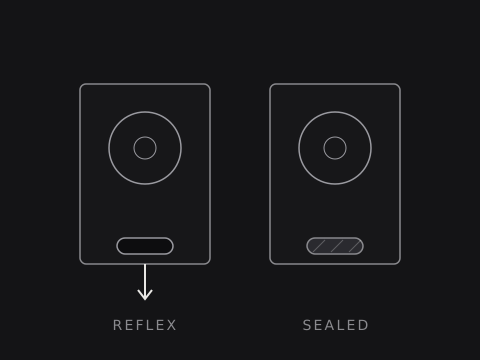
Bass-reflex out of the box, convertible to sealed, with an optional three-way bass system reaching 16 Hz. The monitor is matched to its room, not to a house sound.
We are not voicing a loudspeaker. We are handing back the recording with its temporal and spatial information intact.